

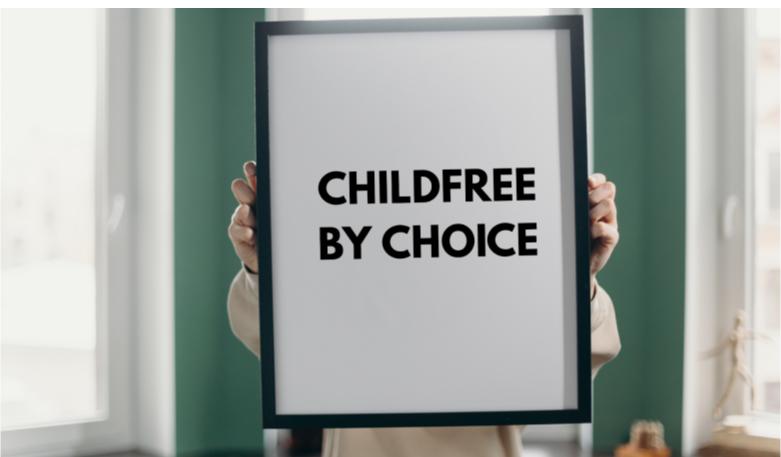
“People had kids because it’s ‘what you do’. Now we realise, oh, it’s a choice!! And sadly, many people still don’t realise it’s a choice.”
The decision of having babies isn’t really about liking babies or hating diapers. It’s about values. About the kind of life you want in 5, 10, or 20 years. About whether you want the experience of raising a child, not just the idea of one.
Social media shows parenting in extremes. Either it’s magical moments full of love and purpose… or endless posts about exhaustion, sickness, no sleep, and losing yourself completely. Watching all of this made you anxious. No one can picture surviving years of sleepless nights and constant worry. But you also couldn’t ignore the fear of regret if you chose not to have kids.
This blog isn’t here to convince you to have kids—or not have them. It’s for anyone sitting on the fence, feeling pressured, scared, or quietly questioning their own reasons. If that’s you, don’t be guilty. You’re just thinking deeply about a life-changing decision—and that matters.
“I’m 32 now, and I still don’t want children. I just don't feel like I want it badly enough, and one should really want to have a child in order to be able to give their 100% as a parent; every child deserves that." — (Reddit)
When someone asks, ‘Is it normal to not want to have kids?’ My reply is YES! It’s totally normal. Because you’re not rejecting the family system. It’s only about seeing the full cost of parenting in today’s world, or maybe you’re not mentally ready to babysit because of some past experiences.
In this modern era, more adults are realizing that love alone doesn’t erase exhaustion, pressure, or loss. They think it is a loss of:
Some just don’t want their perfect routines be disturbed. As one Reddit user answered this question in the thread:
"Sleep. I love sleep. I get up when I'm being paid to get up, but otherwise, my great and immediate joy is sleeping until I don't feel like sleeping anymore. I much prefer sleep to children."
People dealing with childhood trauma have no interest in passing it on to their kids.
"This curse ends with me." — Reddit
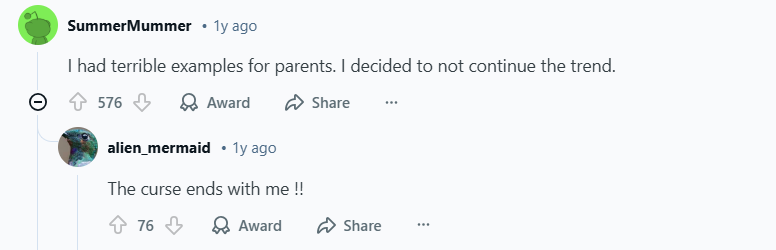
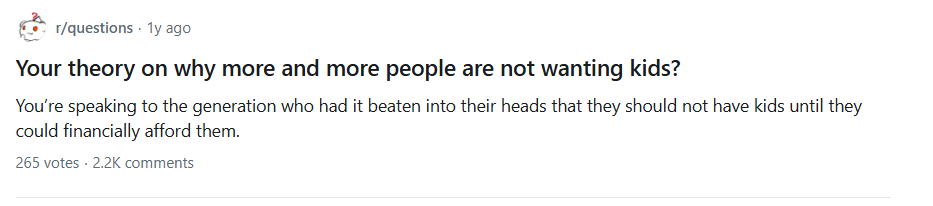
You can navigate more different and I must say interesting opinions on Reddit. I am sharing some.
Please add here the attached screenshots as a swipe gallery. I pasted them at the end of the Blog.
Raising a child isn’t just about love. It’s about money, stability, and having enough to provide a decent life. If your finances are already tight—rent, food, healthcare, or job insecurity—it’s natural to hesitate.
Many people aren’t saying “I don’t want kids.” They’re saying, “I don’t want to bring a child into constant financial stress.”
Childcare costs, education, medical bills, and daily expenses add up fast. For many couples, choosing not to have children isn’t selfish—it feels responsible. They want to give a good life, not a survival one.
If you talk to a parent, they’ll say stuff like ‘good luck, I barely slept longer than a few hours per night for months’ (ignoring the fact that sleep deprivation can take years off of your life and is acutely dangerous). Constant responsibility and no real rest take a serious toll on mental and physical health. Many parents are running on empty, yet are expected to keep smiling.
Most parents today raise children without a backup. Friends drift away. Family lives far. Support systems disappear. What used to be shared across communities now falls on one or two people. It creates deep isolation and emotional burnout.
Two adult parents (sometimes just one) are expected to do everything. Raising an entire human by themselves, with MAYBE the help of a grandparent or aunt, a few hours a week. On top of having entire JOBS? Manage a household, stay emotionally connected as partners, and still have energy left? Without community support, this model asks for more than many humans.
For many women, the cost of parenting is heavier. Pregnancy, childbirth, breastfeeding, emotional labor, beauty and career sacrifices still fall mostly on them. This imbalance creates fear, resentment, and a very real hesitation about motherhood.
They also fear a judgmental society who force you to pick traditional parenting as the only “acceptable” path—even when it doesn’t fit.
Who Are You After the Kids? A common fear isn’t losing freedom forever—but losing yourself. Trying to socialize, especially with people who don’t have kids, is a struggle.
People who don't want to be a parent but still become one often end up lonely, losing friends & a robust social life that is so essential to mental health. Many worry that parenthood will consume their identity and freedom with no way back.
Social media no longer hides the struggle. Parents openly share burnout, regret, anxiety, and mental health challenges. These honest experiences are helpful, but make the reality impossible to ignore.
Some couples are concerned about the condition of the world and don’t think it’s right to bring a child into such a challenging place. For them, choosing not to have kids feels less like avoidance—and more like responsibility.
Once the baby stage passes, the work doesn’t get easier—it just becomes more challenging.
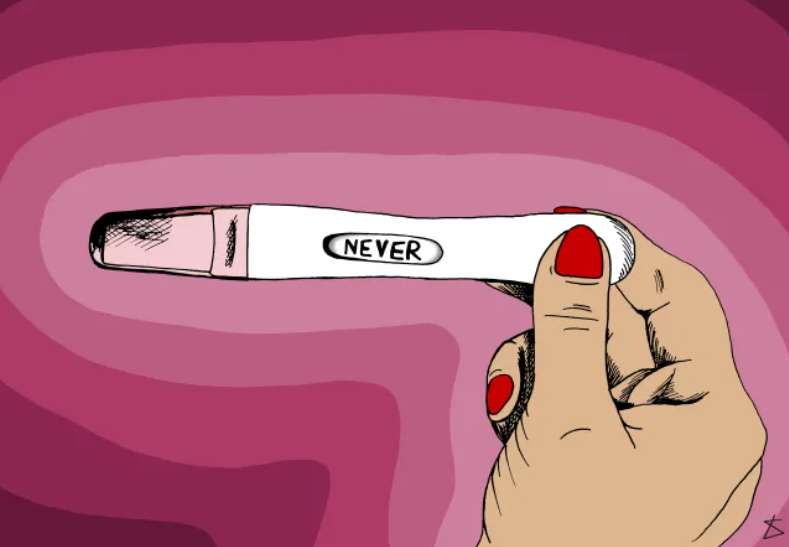
Beyond money, burnout, and lack of support, there are quiet reasons motherhood feels riskier now—especially to women who are watching closely.
Women today hear real stories about pregnancy complications, traumatic births, postpartum depression, and medical dismissal. What used to be hidden behind “it’s all worth it” is now openly discussed—and that honesty makes many pause.
Even in “equal” households, mothers carry the invisible work, like remembering appointments, school forms, emotional needs, schedules, and future planning. It’s not just physical labor—it’s constant mental responsibility with no off-switch.
Mothers are often judged more harshly at work, seen as less ambitious, or quietly passed over. At the same time, they’re judged at home for not doing “enough.”
You’re expected to be everywhere and perfect—without room to be human.
If a relationship fails, motherhood traps women more than men—financially, emotionally, and socially. Many women don’t fear motherhood itself—they fear being stuck with all the consequences if things go wrong.
For the first time, large numbers of women are questioning motherhood without shame. Not because they hate children—but because they are allowed to choose a life that protects their health, peace, and future.
Fighting is a new postpartum phenomenon. People say unwanted kids leads your marriage to divorce. I argue that it's fatigue that brings tensions in most couples. A 2021 study from the University of Born showed that, on average, relationship satisfaction dimmed over time. It declines during the first 10 years of being together, whether couples are parents or not.
Parenthood feels heavy when it’s rushed and not planned. But when it’s chosen intentionally, with awareness and preparation, it is meaningful rather than draining.
Many people struggle because they step into parenting out of pressure—family, age, or culture—not out of readiness. When you choose parenthood on your own terms, the sacrifices feel purposeful, not forced.
People who find parenting fulfilling often aren’t the ones obsessed with babies. They’re the ones who want the long-term experience: guiding a human, building values, creating a family rhythm—not just surviving infancy.
Parenting isn’t meant to be done alone. Couples who plan support—shared labor, flexible work, therapy, community—experience far less burnout.
The burden isn’t the child; it’s doing everything without help.
Healthy parenthood doesn’t erase who you are—it reshapes you. When done in a healthy way, it adds a new layer to your life instead of replacing everything else.
Example:
A woman who loved writing before having a child didn’t stop being a writer after becoming a mother. She wrote less at first, but over time her experiences gave her deeper stories, stronger emotions, and a new sense of purpose. She didn’t lose herself — she grew into a fuller version of who she already was.
Yes, parenting is tiring. But many important things in life are tiring too. Like, studying for a degree, building a career, taking care of loved ones, or working on yourself. The difference is how the effort feels.
When something matters to you, the tiredness feels meaningful, not empty. Just like staying up late to help a friend or working hard for a dream you care about — it’s hard, but it doesn’t feel pointless.
For many parents, parenting is like that. It’s exhausting, but it feels worth it because it connects to love, purpose, and something bigger than daily tasks.
Hard doesn’t always mean wrong. Sometimes, it just means important.
Just as it’s valid to be child-free, it’s valid to want a child even knowing the risks. Choosing parenthood thoughtfully isn’t naive—it’s brave.
“If you’re struggling with whether to have kids or not… know there will likely be grief with either choice you make. There will be grief in never having children. There will also be grief in giving up your current life. Which grief would you rather bear?” (Amanda E. White, LPC, LMHC)
She further shares her experience. For a long time, I thought not wanting kids meant something was wrong with me. I kept searching online for answers—parent stories, advice threads, TikToks, Reddit posts—hoping one of them would suddenly make things clear. Instead, I felt more confused than ever.
The question isn’t “Is parenting hard?” — it’s “Is this the hard I’m willing to carry?”
Being unsure doesn’t mean you’ll be a bad parent—it means you care a lot about your choice. Sometimes, the answer isn't found in a flashing light of certainty, but in quietly asking yourself, as Amanda frames it: Which grief feels like a price you are willing to pay for a life you can truly embrace?
It’s not about finding the “right” answer. It’s about finding the life that feels right for you.
Vicki MCLeod, a writer, coach, consultant, and award-winning entrepreneur said:
“I choose to remain childless because I wanted a fulfilled life, not because of some Physical deficiency. I mean, how can someone lack in this world of choices with a lot more physical choices like in vitro, fertility drugs, egg & embryo donation egg freezing, surrogacy or adoption.”

The most responsible choice isn’t following norms. Choose what makes you feel fulfilled. Whatever path you take, choose it with awareness, not pressure. Choose it because it feels right in your body, not because you’re afraid of regret or judgment.
And if you’re still unsure, you can join support groups (safe spaces) or get expert advice by telling them your situation. They can help you think deeply.
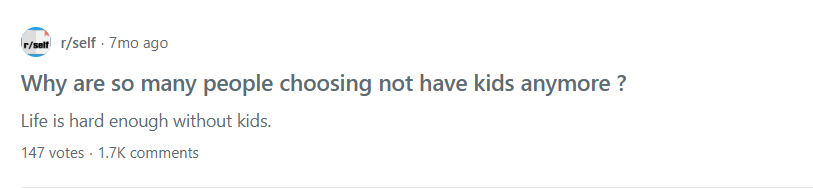
https://www.reddit.com/r/AskReddit/comments/1hlanx4/whats_your_reason_for_not_having_kids/

https://www.reddit.com/r/AskReddit/comments/1hlanx4/whats_your_reason_for_not_having_kids/

https://www.reddit.com/r/questions/comments/1ewikl8/your_theory_on_why_more_and_more_people_are_not/

https://www.youtube.com/watch?v=qJanxSpykiU

.svg)


.png)
.png)


.svg)

.png)


.svg)


