Love bombing feels like intense romance, but it’s usually the first step in an abusive cycle. Discover the warning signs, emotional impact, and steps to protect yourself before it becomes harmful.
Love bombing is when ‘Perfect Love’ starts to feel frail. At first, it feels like a dream.
They text you 'good morning' and 'good night'.
They say things like “I’ve never felt this way before” or “You’re different from everyone else.”
They make you feel chosen, special, finally seen.
Even if it felt like a fairytale at first. Somewhere between the compliments and the constant attention, a strange feeling of uneasiness appears. And that’s your gut feeling telling you that it’s a red flag. It’s like:
You’re happy — but also uneasy.
Loved — but also overwhelmed.
Excited — but quietly scared.
Many people on social media are describing this feeling as:
“I thought I finally found my soulmate, but I was not OK entirely. Something felt off that was making me feel unsafe.”
If that question sounds familiar, don’t consider yourself weird. You are not overthinking. Maybe you are stuck between the absurd cycle of love bombing that looks like “perfect love.”
What is Love Bombing? The Difference Between True Love
Love bombing is when someone moves too fast emotionally. The intense affection, attention, and promises to create a quick attachment are not the signs of true love.
If you notice that your new partner is making you feel like they’re the only one who truly understands you. Things are not right if you see:
Constant messages and calls
Big emotional words very early (“soulmate,” “forever,” “meant to be”)
Pressure to commit fast
The key difference is speed and pressure.
a. Healthy love builds over time.
It feels like walking together.
Allows space and independence
Grows through shared time and trust
Feels calm, steady, and safe
b. Love bombing rushes intimacy and attachment
It feels like being pulled forward before you’re ready.
Feels intense and overwhelming
Creates emotional dependence quickly
Often skips the real getting-to-know-you stages
Why Love Bombing Doesn’t Look Abusive At First
This is the hardest part — because at the beginning, it doesn’t feel bad at all.
It feels like:
Finally being chosen
Emotional safety
Someone prioritizing you
Being wanted deeply
I noticed some people online say:
“I ignored the red flags because it felt so good to be loved like that.”
And that makes sense. We, humans, are wired to respond to societal connections or emotional relations. Some people start dating, spend a lot of time and later realise that they don’t like the person. It was the attention they liked.
The reason is that when someone gives you intense attention, your brain releases dopamine and oxytocin — the same chemicals linked to bonding and attachment. That’s why love bombing feels comforting at first.
But over time, the intensity can turn into:
Guilt when you want space
Anxiety when you don’t respond fast enough
Fear of disappointing them
Feeling responsible for their emotions
Warning Signs of Love Bombing
Emotional red flags that feel “romantic” at first start to feel like pressure.
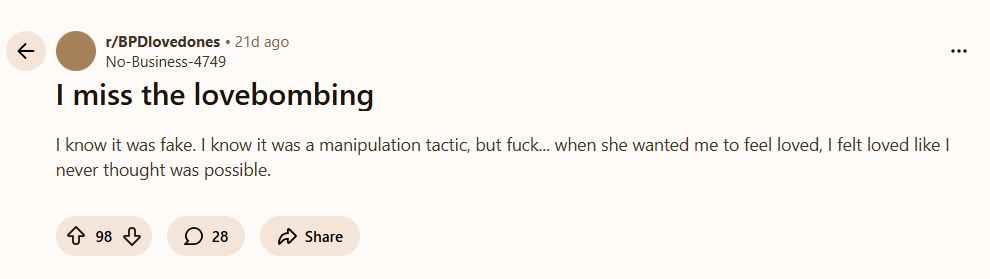
“I didn’t feel safe being myself — I felt like I had to stay perfect.” - Reddit
That’s an important clue.
They say “I love you” or talk about the family meetings, plan future vacations very early, even when they don’t know your 2nd name or you have allergies.
They shower you with gifts
They rush commitment and make you feel guilty for slowing down
They praise and idealize you, then react strongly when you show flaws
You are overwhelmed with texts and phone calls. They want constant access to you and get upset when you need space
They show signs of excessive possessiveness
You feel anxious instead of calm in the relationship
Real Dating Stories And Expert Advice
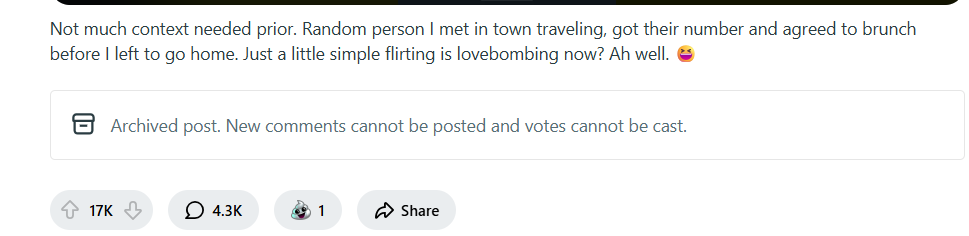
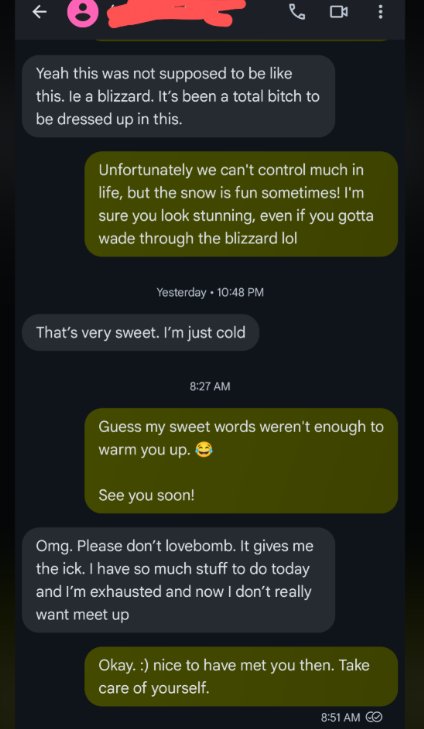
Check out this shared text by Reddit users to evaluate what the difference is here.
Sabrina Zohar, a relationship coach, creator, and host of The Sabrina Zohar Show, presents a different approach to love bombing reasons. The villains whom we call narcissists or manipulators might not be the danger (not all). She believes there are always experiences and psychology behind every behaviour. She says:
‘No one is inherently a red flag’
‘Maybe they are people who genuinely don’t know how to connect people’
‘Or they come out fast because they’re insecure about your reaction’
She shares some tips to evaluate if this is a real connection or just bullshit*.
1- If you’re on your 1st date, and someone is coming very fast, just say ‘Hey I’m excited about you, but I don’t know you well. Why don’t we go on a few dates first to know each other better?
2- If they text you a lot, it might be because they want that domanie hit. They are insecure. It’s about them. You might be amazing, and you know that, but do they know you are amazing?
3- If you feel excited about:
How do they know exactly what I want?
How did they get that easily?
Finally, someone sees my worth.
Stop! It might be the illusion of your brain, because how does a person know all of those things? Maybe you grew up in a household where you were ignored? That’s because you are getting attracted to them, and that’s not love.
4-Go for the facts. See what you actually know about that person? Don’t believe their words, but actions.
5-Check your behaviour too, as to how well you can control your nervous system and whether you align your words and actions.
The Cycle of Love Bombing
First, you have to understand how this pattern works and why it can be so difficult to escape. Psychiatrist and psychoanalyst Dr Thomas Franklin, MD shares his clinical perspective.
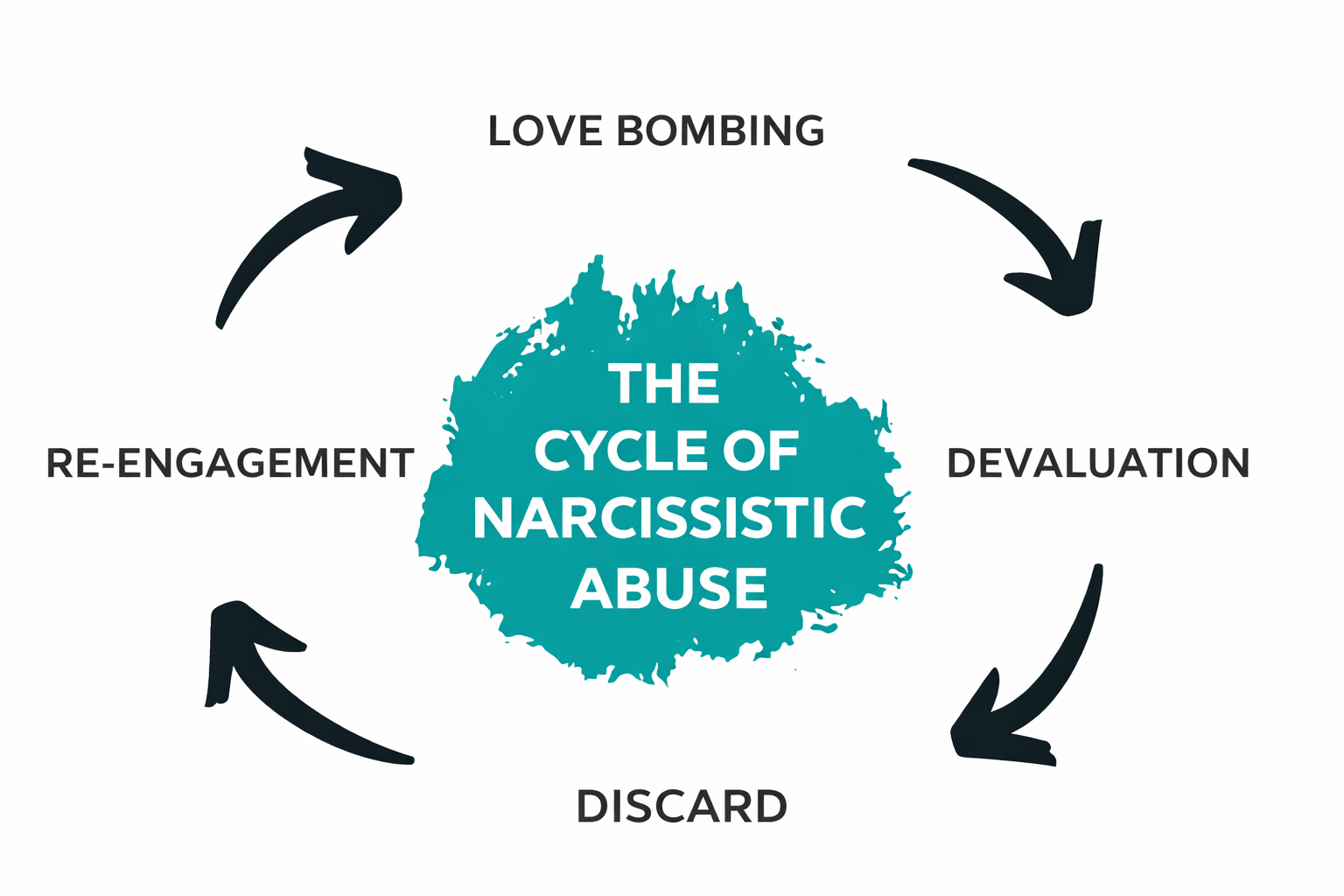
“The narcissistic abuse cycle often involves idealization and devaluation, which becomes chronic. Ultimately, it leads to discarding the person who has been wrung out and is no longer the new shiny object that made the narcissist feel special in the first place. Often these chaotic, aggressive relationships involve other character pathology, including borderline and sociopathy.”
(Dr. Thomas Franklin)
1- Love Bombing
Showering you with attention and affection to create attachment. For example, in the first few weeks, they text nonstop, call you their “soulmate,” talk about the future, and say things like:
“I’ve never felt this way before.”
It feels intense, exciting, and safe — like you’ve finally been chosen.
2- Devaluation
It means the sudden withdrawal of love, becoming critical or manipulative. Once you’re attached, the warmth slowly turns into criticism or emotional distance. For example, the same person who praised everything about you now says, “You’re too sensitive.”
3. Discarding
When they feel they’ve lost control, they suddenly pull away or end things. Like, after you ask for consistency or set a boundary, they disappear, break up abruptly, or act like you never mattered — leaving you shocked and confused.
4. Hoovering
They come back when they sense you’re moving on. Like, weeks later, they message: “I miss you. I’ve changed.” Or show up on important dates, apologize dramatically, or hint that they’re struggling, pulling you back into the cycle.
If You’re Already In the Cycle, What Can You Do Next?
You deserve love that feels safe, not overwhelming. So, if you feel like you are confused, don’t accuse, confront, or label someone right away. Protection starts with listening to your body.
Try this:
Go slow — mentally healthy people will respect that
Watch actions over words
Keep your support system active by holding your routines, friends, and independence
Notice how they respond to boundaries
Ask yourself: Do I feel calmer with them, or more anxious?
Real Love Feels Steady, Not Urgent.
Breaking free from the narcissistic abuse cycle is probably one of the hardest things you will do. And if it has been a long-term relationship or you have kids together, it might look unresolvable.
This cycle is so hard to break because the narcissist has gaslighted you into thinking and believing that everything that happens is your fault. Once you realize what is happening, you can start making changes. You must check this list of given steps:
Be honest with yourself If something feels off, don’t ignore it. Love shouldn’t feel confusing or overwhelming all the time.
Talk to someone you trust Tell a friend, family member, or loved one what’s happening. Outside voices help you see things clearly.
Don’t respond to behaviour that makes you uncomfortable If big gestures or constant messages stress you out, you don’t have to react or thank them for it.
Set a clear boundary Calmly say what feels too much. Healthy partners respect boundaries — love bombers usually don’t.
Get professional support if needed If you feel anxious, drained, or stuck, you don’t have to handle this alone. Talking to a therapist or counselor can help you understand what’s happening and protect yourself emotionally. A therapist who understands narcissism, narcissistic abuse, and its cycles can help give you clarity, tools, and strength to break the cycle and start healing. You can also explore safe mental health support and communities at MentalHappy.
Why Walking Away Feels So Hard Even When You See the Red Flags
Walking away from love bombing isn’t hard because you don’t see the red flags. It’s hard because part of you is still holding on to who they were at the beginning.
You’re Afraid of Losing the Version of Them You First Met
The hardest part isn’t losing them. It’s losing the person they were when they made you feel special, safe, and deeply wanted.
Your mind keeps replaying those early moments:
The way they listened so closely
The way they made you feel seen
The future they talked about so confidently
That version felt real — because to you, it was real.
So walking away feels like giving up on something beautiful, not escaping something harmful.
You Hope the Love Will Come Back If You Try Harder
When the affection fades, your brain looks for answers. You blame yourself and start thinking:
“Maybe I’m asking for too much.”
“If I’m more patient, things will go back to how they were.”
“If I explain myself better, they’ll understand.”
Love bombing makes you believe that love is something you earn, not something you receive unconditionally. So instead of noticing the pattern, you start working harder, fixing yourself, adjusting your needs, shrinking your boundaries.
The Push-and-Pull Creates Emotional Addiction
When they pull away, your nervous system panics. When they come back — even briefly, it feels like relief. That relief gets mistaken for love. Don’t worry, this isn’t your fault or weakness. It’s your brain trying to return to safety, even if that safety is no longer real.
A Reminder: If you recognized yourself in these examples, it doesn’t mean you were weak or naive. Love bombing works because it feels like love at first — not abuse. Wanting it back doesn’t mean you’re foolish; it means you’re human.
And walking away from this heinous cycle doesn’t mean you gave up too early. It means you stayed long enough to finally see the truth.
Real Love Doesn’t Rush, Control, or Confuse You
If something feels off in your relation leaving you confused, exhausted, or questioning your worth, it’s not because you’re weak — it’s because the situation itself is emotionally draining. Love shouldn’t make you feel small, rushed, or scared of losing it. Love should feel safe, steady, and respectful, not like something you have to constantly earn or fix.
Getting support from someone who understands these patterns can make all the difference. The right expert can help you untangle what happened, rebuild your confidence, and guide you toward healthier relationships. If you’re ready to take that step, you can find professional support, therapists, and safe mental health resources at MentalHappy.





.svg)

.png)

