




Support groups play a crucial role in the lives of individuals with disabilities, particularly those with ADHD and autism. These groups provide a safe space for sharing experiences, coping strategies, and emotional support. In this article, we will explore the importance, structure, and benefits of support groups tailored for people with disabilities. Readers will learn how these groups enhance emotional and mental health resources, address the unique needs of neurodivergent communities, and discover ways to find and join these essential support networks. By understanding the dynamics of support groups, individuals can better navigate their challenges and foster a sense of belonging.
"Peer support is most effective when it is consistent and structured," says Dr. Pritika B. Gonsalves, Family Therapist and Expert Group Facilitator with over 10 years of experience. "At MentalHappy, we use a demand-led group caremodel to ensure that every group we launch has a committed community ready to engage from day one."
According to the National Alliance on Mental Illness (NAMI), participating in a peer-led support group can significantly improve long-term recovery outcomes by reducing isolation and providing a safe space for shared experience. Learn more at NAMI.org.
Medical Disclaimer: This content is for informational purposes only and is not a substitute for professional medical advice, diagnosis, or treatment. If you are in a life-threatening situation or a mental health emergency, please call or text 988 (in the US) or go to the nearest emergency room.
Support groups for individuals with ADHD and autism are vital for several reasons. They offer emotional support, allowing participants to share their experiences and feelings in a safe environment. This shared understanding helps reduce stigma and isolation, fostering a sense of community among members. Additionally, these groups provide valuable coping strategies that can enhance daily functioning and overall well-being.
The typical structure of support groups for people with disabilities is designed to create a welcoming and inclusive atmosphere. Most groups are peer-led, meaning that individuals with similar experiences facilitate discussions. Regular meetings are held, providing consistency and a safe space for participants to express themselves. This structure encourages open dialogue and mutual support, essential for building trust and camaraderie among members.
Participating in support groups offers numerous benefits for individuals with disabilities. These include:
For those seeking additional emotional support and mental health resources, MentalHappy Inc. provides a digital platform focused on accessible mental health resources tailored for individuals with disabilities and neurodivergent conditions.
Support groups for people with disabilities are organized gatherings where individuals can share their experiences and challenges. These groups offer various types of support, including emotional, informational, and social. The benefits of participating in such groups include improved mental health, enhanced coping skills, and a stronger sense of community. By connecting with others who understand their struggles, individuals can find solace and encouragement.
Support groups significantly enhance emotional and mental health resources by providing a platform for individuals to express their feelings and concerns. They facilitate discussions on coping strategies, mental health education, and personal growth. This exchange of information and experiences helps participants develop a deeper understanding of their conditions and fosters resilience. Moreover, the supportive environment encourages individuals to seek professional help when needed, further enhancing their mental health journey.
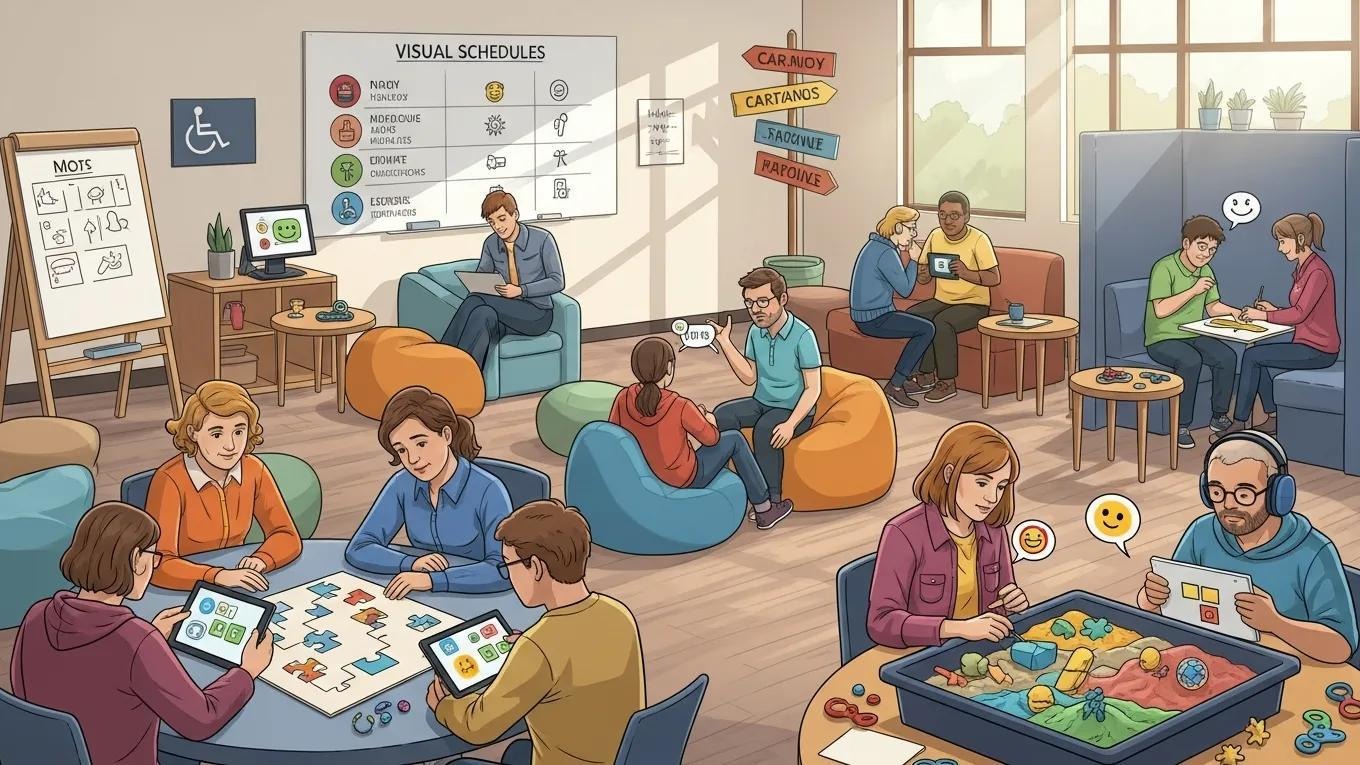
Neurodivergent community groups have specific needs that must be addressed to ensure inclusivity and accessibility. These needs include:
By focusing on these aspects, support groups can better serve their members and foster a sense of belonging.
Research further highlights the specific challenges faced by individuals with ADHD and autism, particularly concerning social skills and the efficacy of interventions.
Social Skills Interventions for ADHD and Autism
Autistic individuals and those diagnosed with ADHD are at greater risk for social difficulties, with evidence suggesting that the co-occurrence of these neurodevelopmental disorders may further exacerbate social challenges. Though social skill interventions have strong empirical support in autistic populations, fewer evidence-based social skill interventions for adolescents with ADHD exist. Further, the impact of co-occurring autism and ADHD diagnoses on social skill treatment response is unknown. This study aimed to investigate the comparative efficacy of the evidence-based PEERS®for Adolescents social skills intervention in adolescents with ADHD, autistic adolescents, and adolescents with co-occurring ADHD and autism.
Outcomes in PEERS® for Adolescents Across Neurodevelopmental Disorders: ADHD, Autism, and
Their Co-occurrence, CT Moody, 2024
Finding and joining ADHD and autism support groups can be a straightforward process. Individuals can start by:
Peer support groups for ADHD can be found through various channels:
Accessing adult autism support groups and community resources involves several steps:
Effective facilitation training is essential for support group leaders to create a positive and productive environment. Best practices include:
Facilitation training significantly improves support group outcomes by equipping leaders with the skills necessary to foster a supportive environment. Trained facilitators can enhance engagement among participants, leading to more meaningful discussions and connections. Additionally, effective facilitation can help manage conflicts and ensure that all members feel valued and heard, ultimately contributing to a more positive group experience.

Online and in-person support groups offer distinct advantages and challenges for individuals with disabilities.
Understanding these differences can help individuals choose the format that best suits their needs.
Further research underscores the distinct yet complementary roles that online and offline support groups play in the lives of families navigating developmental disabilities.
Online vs. Offline Support Groups for Developmental Disabilities
The purpose of this study was to explore what role online and offline support groups play in the lives of families with children who have developmental disabilities. The study revealed that caregivers saw online and offline support groups as playing important but different roles in their lives and the lives of their families. Online support groups were particularly appreciated during the initial steps of learning about a child’s disability when caregivers felt isolated and eager to learn more. During that stage, online support groups offered them volumes of valuable information and access to people across the world who go through similar experiences. Offline support groups offered participants of this study a sense of strong connection and belonging, and allowed them to spend time with other adults and learn about resources available in their community.
Recreation in families with children with developmental disabilities: caregivers' use of online and offline support groups, I Sharaievska, 2018
Exploring the synergy between these formats, some studies investigate how combining online and offline peer support can further enhance mental health outcomes.
Combining Online and Offline Peer Support for Mental Health
Peer support for people with long-term mental health problems is central to recovery-oriented approaches in mental health care. Peer support has traditionally been conducted offline in face-to-face groups, while online groups on the Internet have increased rapidly. Offline and online peer support groups are shown to have differing strengths and weaknesses. However, little is known about how combining the two formats might be experienced by service users, which this paper aims to illuminate.
Combining online and offline peer support groups in community mental health care settings: A qualitative study of service users' experiences, 2020
Virtual neurodivergent community groups offer several advantages, including:
These advantages make virtual groups an appealing option for many individuals seeking support.
Offline support groups play a crucial role in fostering community engagement by providing a space for individuals to connect in person. These groups encourage emotional connections through shared experiences and mutual support. Participants often form lasting friendships, which can extend beyond the group setting. Additionally, offline groups can organize community events and activities, further enhancing engagement and support within the community.

.svg)


.png)
.png)


.svg)


.svg)


