




Monetizing support groups is essential for leaders who wish to sustain their initiatives while providing valuable services to their members. This article explores various monetization models, including pricing structures and subscription options, that can help support group leaders effectively manage their offerings. By understanding how to charge for a support group, leaders can create a sustainable financial model that benefits both the group and its members. We will delve into the intricacies of pricing strategies, subscription models, and the tools available for managing payments and memberships. Additionally, we will discuss how to communicate value to members and the importance of community engagement in fostering long-term success.
Research highlights the critical link between effective business models and the financial sustainability of social ventures, underscoring the importance of strategic monetization.
Sustainable Business Models for Monetizing Social Ventures
The creation of social value through entrepreneurial ventures occurs in various dimensions, which are often difficult to compare. From an economic standpoint, however, value creation requires resources and activities that lead to expenditures. The sustainability of social ventures, therefore, depends on how these expenditures are financed. We develop a general framework in which business models of diverse social ventures can be analyzed and categorized. Our analysis reveals a positive correlation between the monetization of social value creation and financial output, and it shows that relatively simple changes in the business model can have a significant impact on monetization and market performance.
Monetizing social value creation–a business model approach, M Raith, 2015
Determining the right pricing structure for a support group involves several considerations, including the type of services offered and the target audience. Leaders must decide whether to charge participants or offer free services, as this decision can significantly impact group dynamics and commitment levels. Factors influencing pricing include the duration and frequency of meetings, as well as the resources provided to members. Charging for participation can foster a sense of commitment among members and help cover operational costs, ensuring the group's sustainability.
After establishing a pricing structure, leaders can explore various monetization options that align with their group's mission and goals. MentalHappy Inc. offers resources and support for leaders looking to implement effective pricing strategies tailored to their specific needs.
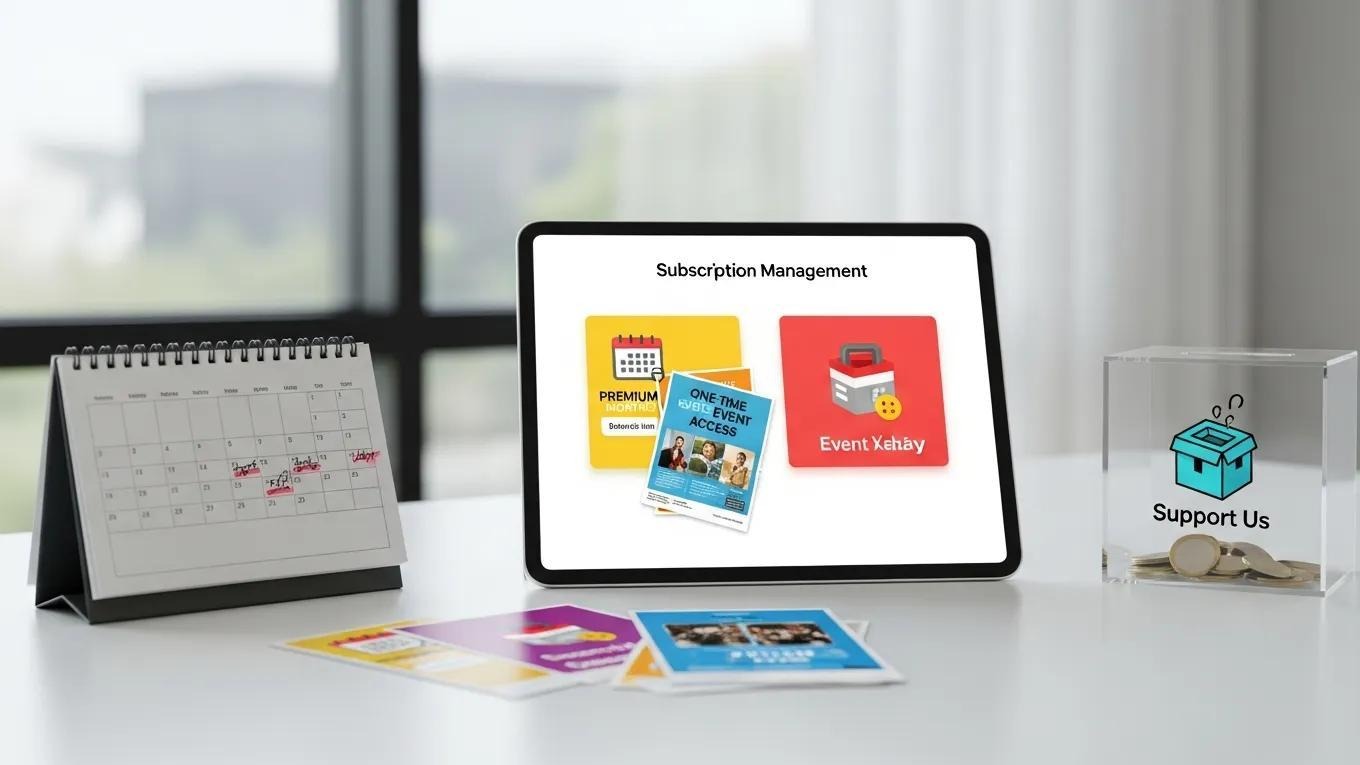
Subscription models provide a flexible approach to monetizing support groups, allowing leaders to cater to different member preferences. Common subscription options include:
These models can be adjusted based on member feedback and engagement levels, ensuring that the pricing remains fair and accessible. MentalHappy Inc. supports leaders in implementing these subscription options effectively, helping them manage memberships and payments seamlessly.
When hosting support groups, leaders must also consider platform fees associated with the tools they use. These fees can vary widely, typically ranging from $5 to $25 annually, depending on the platform and the features offered. Understanding these costs is crucial for leaders to budget effectively and ensure that their pricing structure covers all necessary expenses.
Efficient payment collection is vital for maintaining a steady revenue stream. Leaders should utilize platform features that facilitate seamless payment processing, ensuring that members can easily sign up and pay for their subscriptions. A smooth payment process encourages sign-ups and helps maintain member satisfaction, which is essential for the group's success.
Effective promotion strategies are key to attracting new members to support groups. Leaders can leverage local partnerships and social media platforms to reach a wider audience. Engaging content, such as testimonials and success stories, can also help draw in potential members. By showcasing the value of the group, leaders can create a compelling case for why individuals should join and invest in their mental health.
Regular feedback from group members is essential for assessing the effectiveness of pricing strategies and overall group dynamics. Leaders should actively seek input on pricing, services, and meeting formats to ensure that they are meeting the needs of their members. Adjustments based on this feedback can lead to improved member satisfaction and retention, ultimately enhancing the group's success.
Ensuring that support groups have access to necessary resources is crucial for their effectiveness. Leaders should provide digital tools and educational materials that enhance the overall experience for participants. By investing in quality resources, leaders can create a more engaging and supportive environment, which can lead to higher retention rates and increased member satisfaction.
Effective pricing strategies for support group membership fees can significantly impact a group's success. Here are some strategies to consider:
These strategies can help leaders create a pricing model that not only covers costs but also reflects the value provided to members.
Choosing between tiered and flat-rate pricing models depends on the group's structure and member preferences. Flat-rate pricing offers simplicity and predictability, making it easier for members to understand costs. In contrast, tiered pricing allows for customization, enabling members to select the level of service that best fits their needs. Leaders should consider their target audience and the services offered when making this decision.
Further academic exploration into community leader pricing strategies provides insights into the effectiveness of uniform versus differentiated models, especially concerning trust and profitability.
Community Leader Pricing Strategies: Uniform vs. Differentiated Models
This paper is motivated by the rapid development of community group buying (CGB), where the CGB platform dramatically relies on the community leader to provide last-mile services and fulfill consumers’ orders. This work adopts a game-theoretical model and investigates how the pricing strategy, uniform pricing strategy (N) or differentiated pricing strategy (Y), affects players’ performance and decisions on effort level. Moreover, when the community leader is a friend role and the trust value is high, both the platform and community leader can gain higher profits under the uniform pricing scenario than the differentiated pricing case.
Pricing strategy and its impact on the effort of community leader and platform: Uniform or differentiated pricing?, 2024
Several factors influence the setting of support group fees, including:
Understanding these factors can help leaders establish fair and effective pricing that resonates with their members.
Managing memberships and subscription models requires a strategic approach. Leaders should focus on building trust and community among members, fostering an environment where individuals feel valued and supported. Regular engagement through check-ins and updates can enhance member satisfaction and retention, ensuring the group's long-term success.
Several tools can assist support group leaders in managing subscriptions effectively. Key features to look for include:
By selecting the right tools, leaders can streamline their operations and focus on providing valuable support to their members.
Communicating value to support group members is essential for maintaining engagement and satisfaction. Strategies include:
These approaches can help leaders effectively convey the benefits of membership and encourage ongoing participation.
Selecting the right payment platform is crucial for monetizing mental health support groups. Ideal platforms should offer:
By choosing the right payment platform, leaders can simplify the payment process and focus on supporting their members.
Digital payment gateways offer several advantages for support groups, including:
These benefits make digital payment gateways an essential component of a successful monetization strategy.
Integrating payment solutions into support group platforms should be user-friendly and maintain confidentiality. Leaders should prioritize platforms that offer straightforward integration processes, ensuring that members can easily navigate payment options without compromising their privacy. This seamless integration can enhance the overall member experience and encourage participation.

Community engagement is vital for sustainable monetization of support groups. Effective tactics include:
These strategies can help leaders build a strong community that supports ongoing monetization efforts.
Building community retention is crucial for increasing subscription revenue. Active participation enhances loyalty, leading to higher renewal rates and member satisfaction. Creating a supportive atmosphere where members feel valued can significantly impact retention, ultimately boosting revenue and ensuring the group's longevity.
Support group leaders play a pivotal role in fostering engagement within their communities. By creating a welcoming environment and facilitating healthy discussions, leaders can encourage participation and build trust among members. This engagement is essential for maintaining a vibrant and supportive community that thrives on collaboration and shared experiences.
About the Author:
"Peer support is most effective when it is consistent and structured," says Dr. Pritika B. Gonsalves, Family Therapist and Expert Group Facilitator with over 10 years of experience. "At MentalHappy, we use a demand-led group caremodel to ensure that every group we launch has a committed community ready to engage from day one."
According to the National Alliance on Mental Illness (NAMI), participating in a peer-led support group can significantly improve long-term recovery outcomes by reducing isolation and providing a safe space for shared experience. Learn more at NAMI.org.

.svg)

.png)
.png)


.svg)


