




In the evolving landscape of mental health care, large-scale program deployments are essential for enhancing access to group therapy solutions. These programs aim to provide scalable, effective mental health support to diverse populations, addressing the growing demand for accessible mental health resources. This article will explore strategies for implementing scalable group therapy solutions, best practices for management, potential challenges, and the benefits of health system group care models. By understanding these elements, health systems can better serve their communities and improve mental health outcomes.
Research emphasizes the critical need for scalable mental health solutions that ensure equity and broad access across large health systems.
Scalable Group Therapy for Health Systems
Mental Health Care require solutions that are both scalable -neutral proposition for health care systems, meaning they earn proved when implementing it across a large health system.
Mental health care equity and access: A group therapy solution., P Mallow, 2023
Implementing scalable group therapy solutions requires a multifaceted approach that integrates technology and structured methodologies. Key strategies include:
These strategies not only improve the effectiveness of group therapy but also ensure that mental health services are accessible to a broader audience.

To maximize the effectiveness of group therapy, certain best practices should be followed:
By adhering to these best practices, health systems can create a supportive atmosphere that fosters healing and growth.
While implementing scalable group therapy solutions, several challenges may arise:
Addressing these challenges proactively can lead to more successful program deployments.
Health system group care models are structured approaches that facilitate the delivery of mental health services to multiple individuals simultaneously. These models enhance scalability and accessibility, allowing health systems to serve larger populations effectively. The benefits include:
Further studies highlight the importance of scaling group therapy within mental health systems, particularly for specialized needs like PTSD.
Scaling Group Therapy in Mental Health Systems
for group therapy or otherwise be deemed unsuitable for group therapy treatment by an HCP particularly valuable in mental health systems seeking scalable models that address PTSD
The CARE implementation study: scaling group-based psychoeducational trauma therapy across healthcare organizations in Canada, 2026
Group care models significantly enhance mental health capacity by allowing for flexible group sizes and user-friendly platforms. These models provide data insights for facilitators, enabling them to tailor sessions to meet the needs of participants effectively. By leveraging technology, health systems can optimize their resources and improve service delivery.
Successful deployment of scalable group therapy solutions involves several key strategies:
These strategies ensure that group therapy is not only effective but also sustainable in the long term.
Successful deployment often relies on robust models for large-scale dissemination and implementation of evidence-based practices.
Large-Scale Implementation of Evidence-Based Treatment
This article describes a large-scale dissemination and implementation model incorporating these components with staff working at treatment organizations that have received federal
A large‐scale dissemination and implementation model for evidence‐based treatment and continuing care., SH Godley, 2011
Several tools can aid in managing group therapy effectively:
By selecting the right tools, health systems can improve the efficiency and effectiveness of their group therapy programs.
Hosting and managing support groups effectively requires adherence to best practices:
Implementing these practices can lead to more successful and impactful support groups.
Mental health programs can measure and build capacity through various methods:
These methods enable health systems to enhance their capacity and better serve their communities.
Several metrics can indicate the success of mental health program capacity:
By focusing on these metrics, health systems can ensure their programs are meeting the needs of their communities.
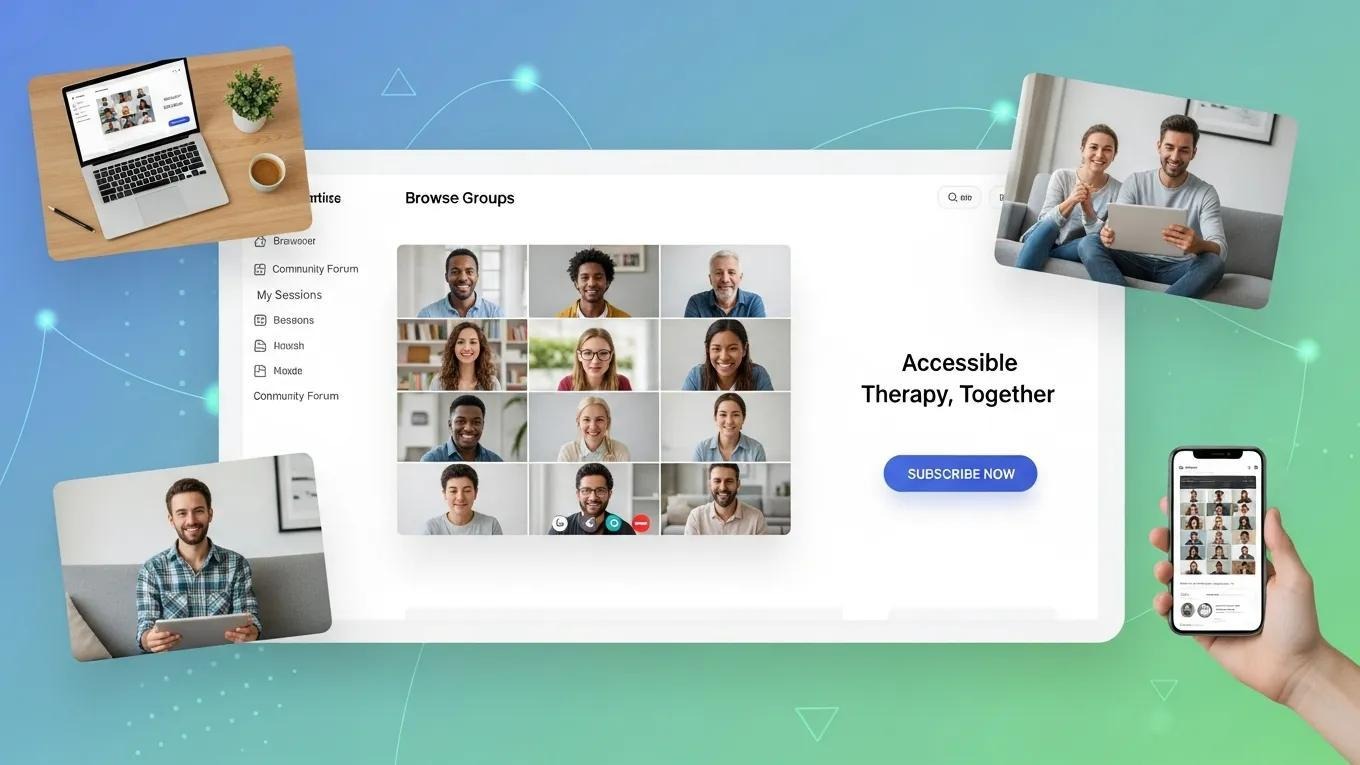
Subscription models can enhance the sustainability of group therapy services by providing a steady revenue stream. This approach allows health systems to offer cost-effective care while ensuring that services remain accessible to a broader audience. Additionally, subscription models can facilitate scalability, enabling health systems to expand their offerings without significant upfront investments.
Subscription services in group therapy offer several advantages:
These benefits make subscription services an attractive option for both providers and participants.
Subscription models foster community engagement by creating a sense of belonging among participants. Regular interactions within therapy groups can strengthen connections and support networks, enhancing the overall therapeutic experience. Additionally, these models can facilitate flexible delivery options, allowing participants to engage in therapy at their convenience.
To optimize access to group therapy platforms, several pricing strategies can be employed:
These strategies can enhance accessibility and ensure that group therapy services are available to a wider audience.
About the Author:
"Peer support is most effective when it is consistent and structured," says Dr. Pritika B. Gonsalves, Family Therapist and Expert Group Facilitator with over 10 years of experience. "At MentalHappy, we use a demand-led group care model to ensure that every group we launch has a committed community ready to engage from day one."
According to the National Alliance on Mental Illness (NAMI), participating in a peer-led support group can significantly improve long-term recovery outcomes by reducing isolation and providing a safe space for shared experience. Learn more at NAMI.org.

.svg)

.png)
.png)


.svg)


